Differentiated Instruction
What does this strategy look like in practice?
How do you plan to differentiate in your classroom?
Evidence of differentiation in your lesson (in some way - where you could differentiate, why you didn't, etc).
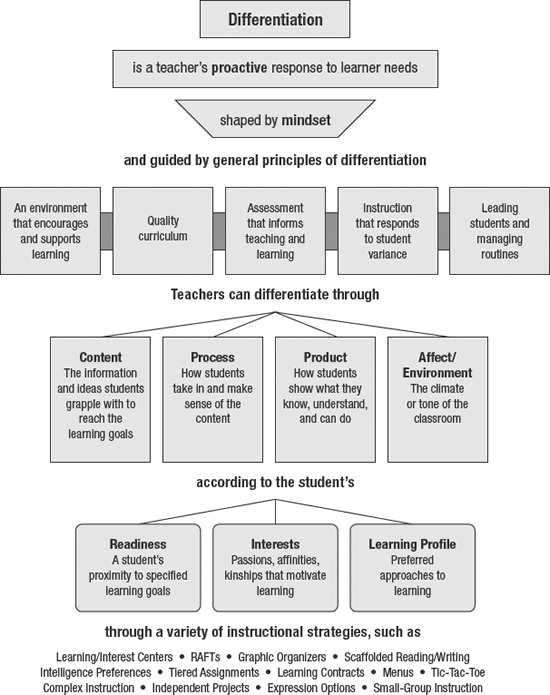
Differentiation in practice looks like knowing your students well enough to understand their needs, their strengths and weaknesses, and their learning preferences and being able to provide learning tools that are reflective of those concepts without singling out certain students or making students feel uncomfortable with differences in learning (See Image 1). My placement at Friends School Haverford has shown me that differentiation can look like very small, specific things, like providing students with the tools necessary to concentrate, and it can look like really big curricular changes, like taking out a lesson plan that heavily relies on sight when a student in the class is nearly blind. More simply, it can also just look like providing more pathways for engagement through engaging in a wider variety of learning tools.
There are three big ways that I hope to use differentiation in the classroom: through encouraging students to propose their own ideas, creating learning stations, and utilizing a tic-tac-toe arrangement for learning assessments. The first method, which is encouraging students to propose their own ideas, directly relates to how students can be given choice in the ways that they are assessed. By providing overarching guidelines, this allow students to choose project topics that they are interested in and the mediums in which they feel would best exemplify their work, whether it be through the use of oral presentations, creating an online website, or a physical model. The second method, which is creating learning stations, simply refers to creating multiple activity-based learning opportunities that engage students through different senses and in different ways. For example, in a science class about photosynthesis, this might look like having one station for data collection on a plant growth project, one station for a illustrated video explaining how cells work to allow plants to do photosynthesis, one station for students to use a model of the cell and ATP and nutrient transfers to explain them to other students, and one station where students create and draw out a simple model of the transfer of inputs and outputs in photosynthesis. Using different methods to learn the same or similar learning objectives is not only helpful for ingraining learning into students, but it also allows students to find the best ways to learn certain topics through this exploration in class. Finally, the last method, which is the tic-tac-toe assessment plan, allows students to choose the ways in which they are assessed, while also providing at least one method that challenges them (See Image 2). Because students have to choose at least three methods of assessment, students are given meaningful choice in deciding how they want to present their learning. They are also always challenged to present their learning in one method that they may not always prefer as a way to further develop their skills in other areas, such as public speaking or web design. It also allows students with specific abilities to be able to prioritize their needs, such as the option for a student with a speech impediment to not do an oral presentation, while still being able to demonstrate their learning without other students feeling as though there may be some kind of unfair or preferential treatment.
One example in my lessons where I have utilized differentiation is the example I have provided above about the different stations in which students can learn about different cycles of matter through different types of activities, which can be seen in my Lesson Plans.